If you’ve ever wondered why paying off one credit card barely moved the number while missing a single payment tanked it, the short answer is that not everything in your credit history counts equally. How credit scores work actually comes down to five factors, weighted very differently, and knowing the weighting changes what’s actually worth your attention.
The Five Factors, and Why They’re Not Equal
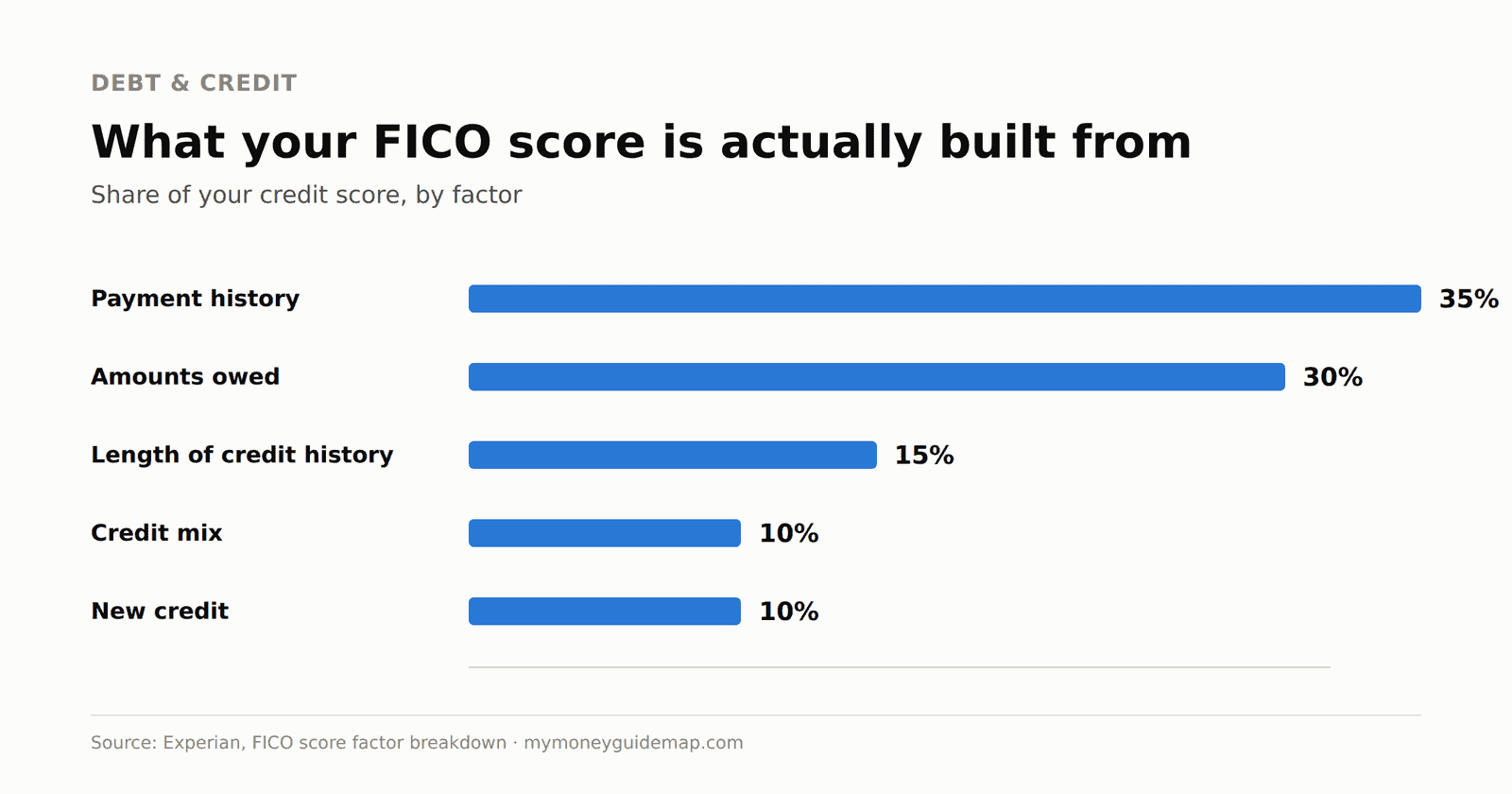
Your FICO score — the model most lenders actually use — runs from 300 to 850, and Experian breaks down exactly how it’s built. Payment history carries the most weight at 35%, which is why a single missed payment does more damage than almost anything else you could do — it’s telling lenders directly whether you pay what you owe when you owe it.
Amounts owed comes in close behind at 30%, and this is mostly about your credit utilization ratio — how much of your available credit you’re actually using. People with top-tier scores tend to keep utilization under 10%, though staying under 30% is generally considered the safer floor. This is also the factor that moves fastest: pay down a card and your utilization (and often your score) can shift within a billing cycle.
Length of credit history makes up 15%, covering the age of your oldest account, your newest account, and the average age across everything you have open. Credit mix and new credit each account for 10% apiece — mix rewards successfully managing different types of credit (a mortgage or auto loan alongside credit cards), while new credit tracks how many hard inquiries you’ve racked up recently.
Why a Hard Inquiry Isn’t as Scary as It Sounds
A lot of people avoid applying for anything credit-related out of fear it’ll wreck their score. In reality, a single hard inquiry typically costs less than five points, and that dip usually recovers within a few months as long as you keep paying your bills on time. It’s not nothing, but it’s a much smaller lever than payment history or utilization — worth knowing before you talk yourself out of a legitimate application over it. And TransUnion’s breakdown of inquiry types is worth a look if you want the fuller picture of which checks count as hard versus soft.
What Doesn’t Actually Show Up in Your Score
Your income isn’t a factor at all, which surprises a lot of people — a high earner with maxed-out cards and missed payments can easily have a worse score than someone earning far less who pays on time. Rent and utility payments generally don’t count either, unless you’re specifically enrolled in a service that reports them, which most people aren’t by default. And checking your own credit score doesn’t hurt it — that’s a soft inquiry, which is treated completely differently from the hard inquiry a lender runs when you apply for something.
What Actually Moves the Needle Fastest
Given the weighting, the two levers worth the most attention are the same two that make up 65% of the score combined: paying everything on time, every time, and keeping your utilization low relative to your limits. Everything else — credit mix, length of history, new inquiries — matters, but moves the number far more slowly and with far less room to game it intentionally. If you’re only going to actively manage two things, those are the two.
It’s worth remembering, too, that a missed minimum payment does damage here regardless of whatever else you’re doing right — even a solid debt payoff strategy doesn’t protect your score from a payment that’s late, since the snowball and avalanche methods are both about which balance to prioritize, not a substitute for paying every account’s minimum on time.
The Actual Takeaway
None of this is about gaming a number for its own sake — it’s about understanding what a lender is actually trying to measure, which is fairly simple underneath the five categories: do you pay what you owe, and how much of your available credit are you leaning on at any given time. Get those two right consistently, and the rest of the score tends to take care of itself over time.
5 thoughts on “How Credit Scores Work”