If your open enrollment window just opened and the new premium quote made you do a double take, you didn’t misread it. Open enrollment 2026 is landing with the sharpest premium increases in years, and the smart move isn’t waiting until your new paycheck deduction hits to figure out the math — it’s building the new number into your budget the same week you pick a plan.
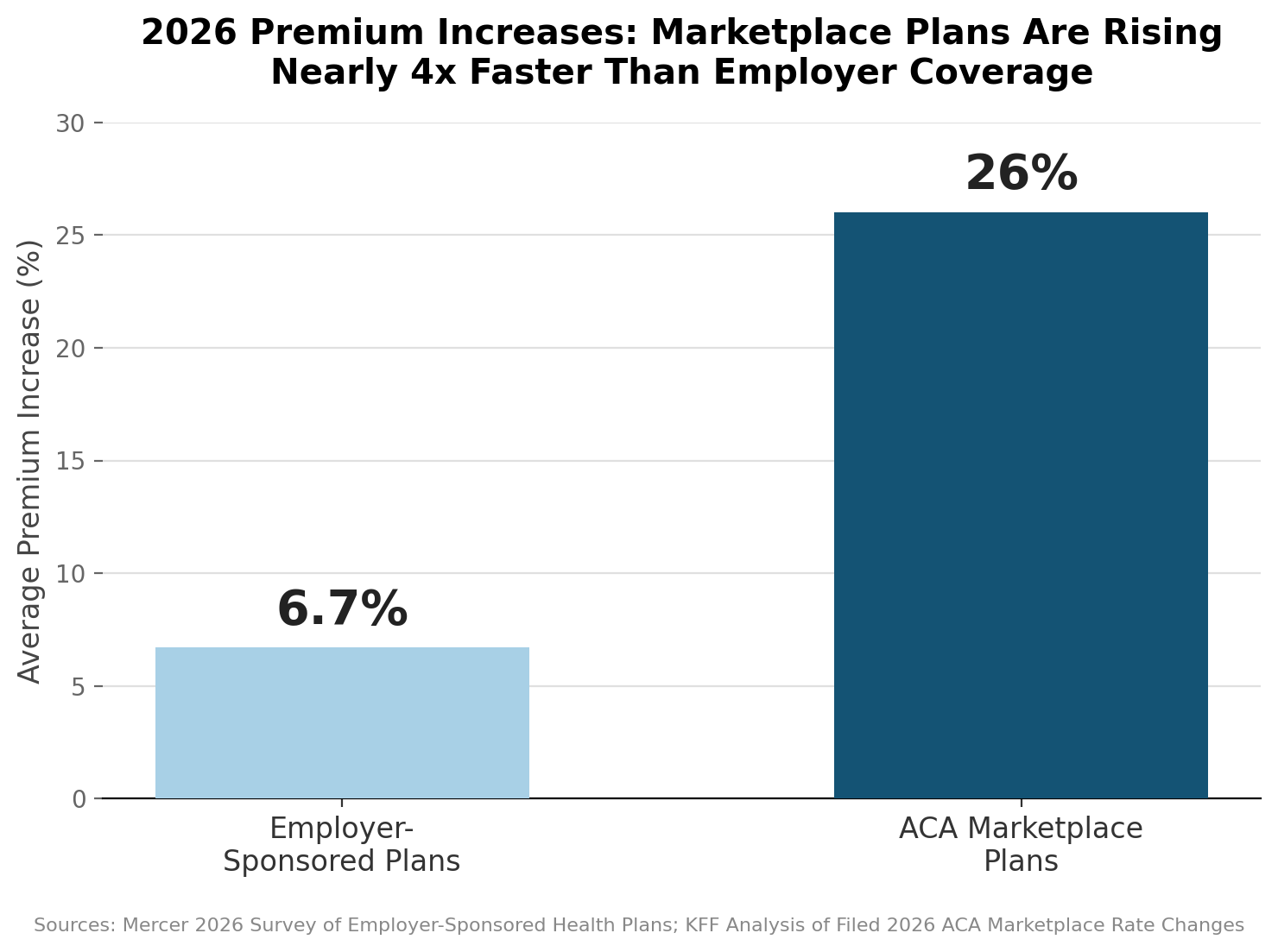
Employer-sponsored coverage alone is projected to top $18,500 per employee in 2026, a 6.7% jump that outpaces the 6.0% increase employers absorbed the year before, according to Mercer’s annual survey of large employers. On average, workers in a standard PPO plan are paying about $191 a month out of their own paycheck for individual coverage, while those on a high-deductible plan paired with an HSA pay closer to $109 a month, a gap worth knowing before open enrollment 2026 forces a plan choice.
Why This Open Enrollment 2026 Feels So Different
The picture is even sharper for anyone buying coverage through the ACA marketplace rather than an employer. Insurers are raising what they charge by an estimated 26% on average nationwide, with states that use healthcare.gov seeing closer to 30% and state-run marketplaces seeing about 17%, according to KFF’s analysis of filed rate changes. Rising hospital costs, a surge in GLP-1 weight-loss drug prescriptions, and anticipated tariff effects are the main drivers insurers point to.
What actually lands in your budget depends heavily on whether you get a subsidy. Roughly 22 of the 24 million marketplace enrollees currently receive a premium tax credit that caps their payment at a set share of household income, so their monthly cost can stay roughly flat even while the sticker price insurers charge jumps sharply.
The real risk is the enhanced tax credits themselves: if Congress lets them expire at year’s end, KFF estimates subsidized enrollees would see their actual monthly payment rise by around 114%, and anyone earning above four times the poverty line would lose the subsidy entirely on top of paying the higher sticker price.
Budgeting for this starts with getting an exact number rather than an estimated one. Log into your employer’s enrollment portal or the marketplace and pull the actual 2026 premium for your specific plan and household size, not last year’s figure adjusted by a rough percentage, since the increase varies enormously by plan type, region, and subsidy eligibility.
Compare that new deduction against last year’s paycheck to see the real dollar gap, then decide where that difference gets absorbed in the budget before the first new paycheck arrives, whether that means trimming a discretionary category or adjusting a savings transfer.
It’s also worth checking whether a different plan tier actually saves money once the new premiums are in front of you. A plan that made sense last year at the old price gap between a PPO and a high-deductible option might flip once both premiums rise by different amounts, so re-running that comparison during open enrollment 2026 rather than defaulting to last year’s choice can be worth real money over twelve months.
For anyone whose income puts them near the subsidy cliff, it’s worth running the numbers both with and without the enhanced tax credit before assuming either outcome, since the final rules on that extension may not be settled until close to enrollment deadlines in some states. Building a placeholder buffer into the budget for a worse-case premium, then adjusting once the final number is confirmed, beats being caught short by a decision made in Washington rather than at your kitchen table.
None of this is a one-time adjustment, either. Since health costs have now outpaced general inflation for multiple years running, treating the annual premium increase as a recurring line item to budget for each fall, the same way you’d plan for a property tax reassessment, is a more realistic approach than hoping next year’s number levels off on its own.
Once the new premium is locked in, our guide on pay yourself first covers how to rebuild your savings transfer around a lower take-home number without losing ground on your other goals. Open enrollment 2026 only comes around once a year, but the budget decision made this week is the one you’ll be living with for the next twelve months.