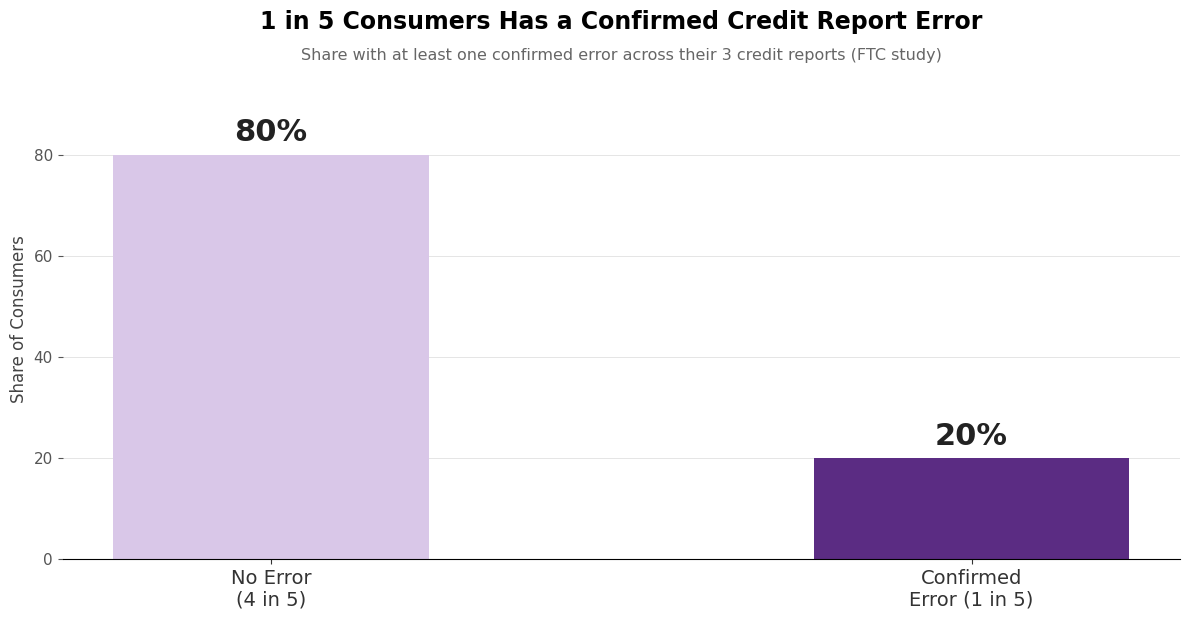
If a lender ever turned you down and you pulled your credit report only to find an account that isn’t yours or a balance that’s just wrong, you’ve found a real credit report error, and you’re not alone. The FTC’s own congressionally mandated study found that one in five consumers has at least one confirmed error somewhere across their three reports, and fixing it is a right you already have under federal law, not a favor a credit bureau does you.
The law behind that right is the Fair Credit Reporting Act, and it gives you a real deadline rather than a vague promise: once you file a dispute, the credit bureau has 30 days to investigate a reported error and respond. That clock starts the day they receive your dispute, not the day you first noticed the problem, so the sooner you file about a credit report error, the sooner it’s resolved.
How to Actually Fix a Credit Report Error
The strongest disputes are specific rather than general. Instead of saying an account “looks wrong,” identify exactly which account, which figure, and why it’s incorrect, then attach copies (never originals) of anything that backs up your claim, such as a payment confirmation or a letter from the original creditor.
Each of the three bureaus has its own online dispute portal, plus a phone and mail option, and it’s worth filing with all three at once if the same error shows up on more than one report, since disputing with one bureau does not automatically update the others.
It also helps to dispute directly with whoever supplied the bad information to the bureau in the first place, usually the lender, collection agency, or original creditor, using a similar letter. That business is legally required to investigate too, and if they confirm the entry really is wrong, they have to tell all three bureaus to fix it, not just the one you complained to.
This isn’t a rare, one-off situation for the system as a whole. The Consumer Financial Protection Bureau logged roughly 6.6 million complaints in 2025, nearly double the year before, and about 88% of them were related to credit or consumer reporting, making it the most-complained-about financial product category for five years running. A common cause behind a real credit report error is an account that belongs to someone else with a similar name, a duplicate collection entry for a single unpaid debt, or a negative item “re-aged” with a more recent date so it stays on the report longer than the legal limit allows.
If a bureau’s investigation comes back saying the information is accurate when you’re confident it’s genuinely wrong, you’re not out of options. You can add a personal statement to your file explaining your side, which future lenders will see alongside the disputed item, though the bureau may charge a small fee for that specific service. A stronger next step for a genuinely stuck dispute is filing a complaint directly with the CFPB, which tends to get more attention from bureaus than a routine consumer dispute, especially when an item was “verified” without any real investigation on the bureau’s end.
One pattern worth watching for: a debt that was correctly removed after a successful dispute sometimes reappears months later, especially if it was sold to a different collection agency in the meantime. Each bureau is required to notify you if a previously deleted item is reinserted, so it’s worth checking your report again about two to three months after a successful fix rather than assuming the correction is permanent.
None of this requires paying a credit repair company, which typically charges monthly fees to send the exact same dispute letters you can send yourself for free. The one thing a paid service can’t do that you can’t do yourself is manufacture an error that doesn’t exist, so a legitimate, accurate negative item will come back regardless of who files the paperwork.
For a fuller walkthrough of what each section of your credit file actually means before you start disputing anything, our guide on how to read your credit report breaks down every category line by line. Catching a credit report error early, before it factors into a mortgage or auto loan decision, is worth far more than catching it after the fact — and under the FCRA, the 30-day clock is already running the moment you decide to send that first letter.