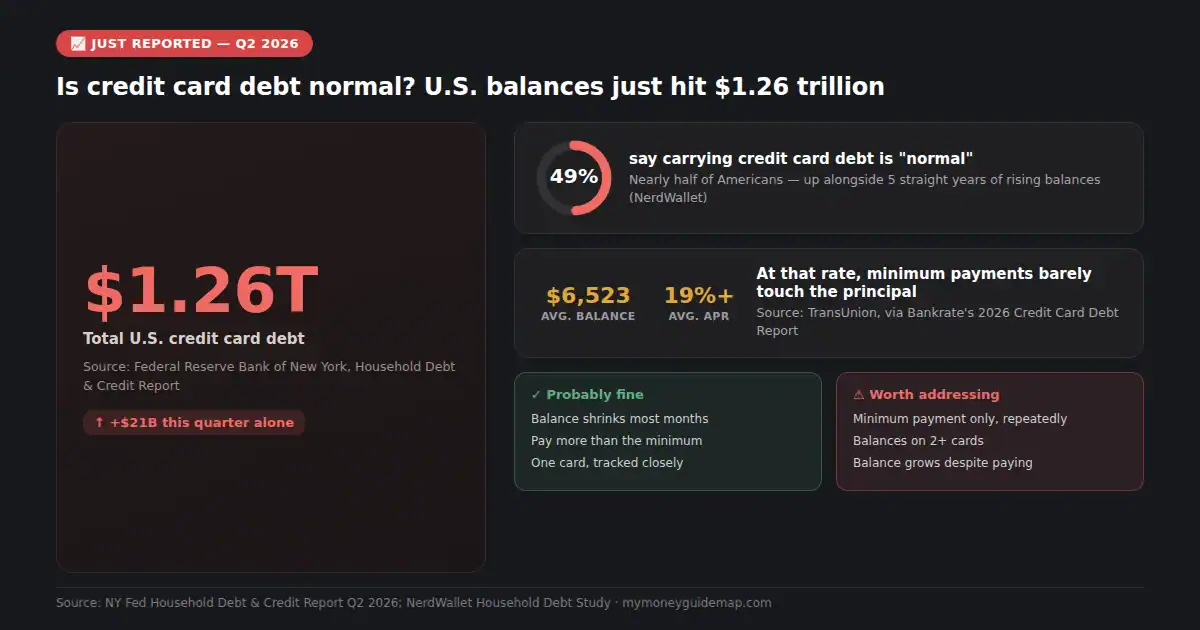
Is credit card debt normal, or does it just feel that way because everyone around you seems to be carrying some? The numbers say it’s the second one, and they came out just this week: total U.S. credit card balances climbed to $1.26 trillion in the second quarter of 2026, according to the New York Fed, a $21 billion jump in three months alone. If your own balance hasn’t moved but everyone else’s has, you’re not imagining the shift.
Half the Country Has Already Decided the Answer
Nearly half of Americans, 49%, now say carrying revolving credit card debt is simply normal, according to NerdWallet’s most recent household debt study. That’s not a fringe opinion anymore, it’s close to a majority view, and it lines up with what’s actually happening to balances: revolving debt has been climbing steadily since 2021, and 47% of people currently carrying a balance expect theirs to grow again before the year is out. About one in six have paid off their card debt completely at some point, only to run it back up again.
Common Isn’t the Same Thing as Fine
Is credit card debt normal enough that you shouldn’t worry about your own? That depends less on the national average than on a few specific habits. Making only the minimum payment month after month, carrying balances across more than one card, putting everyday necessities on credit because there’s no other room in the budget, and watching a balance creep up even though you’re paying something toward it every month — those are the signs that debt has stopped being a temporary tool and started being a structural problem. Credit counselors distinguish sharply between the two: a balance that’s common across households is not automatically a balance that’s manageable in yours.
It’s also not evenly spread. The same New York Fed data shows credit card balances flowing into serious delinquency at 6.97% this quarter, only slightly above last year, but economists have flagged a widening gap between households handling debt fine and those falling further behind — meaning the “half of America” answer to is credit card debt normal hides two very different groups underneath one average.
The Math That Makes It Worse Than It Looks
Part of why this is worth paying attention to right now is the rate environment it’s happening in. Average credit card APRs are sitting above 19%, and the average balance per cardholder is around $6,523. At that rate, minimum payments barely dent the principal — most of what you send in covers interest first, which is exactly how a balance can grow even while you’re technically paying it down every month. It’s also why credit counselors don’t recommend just gritting your teeth through it: a 0% balance-transfer card, some of which run for up to 21 months with no interest, can turn that same payment into actual progress instead of just covering interest, and it’s worth the transfer fee for most people carrying more than a few hundred dollars.
Is credit card debt normal for someone who pays their statement in full every month and never carries a balance at all? Not in the way this data is describing — that’s a different, much less risky use of credit entirely, and none of this applies to it. For everyone else, the reassurance that “everyone’s doing it” is true, but it’s not the same as the debt being harmless, and the two habits worth checking first are whether you’re only paying the minimum and whether the balance is actually shrinking or just being maintained. If a balance has been sitting for a while, comparing the debt snowball and avalanche payoff methods is a reasonable next step once you’ve decided which one of your cards to tackle first.
1 thought on “Is Credit Card Debt Normal? Best 2026 Numbers”