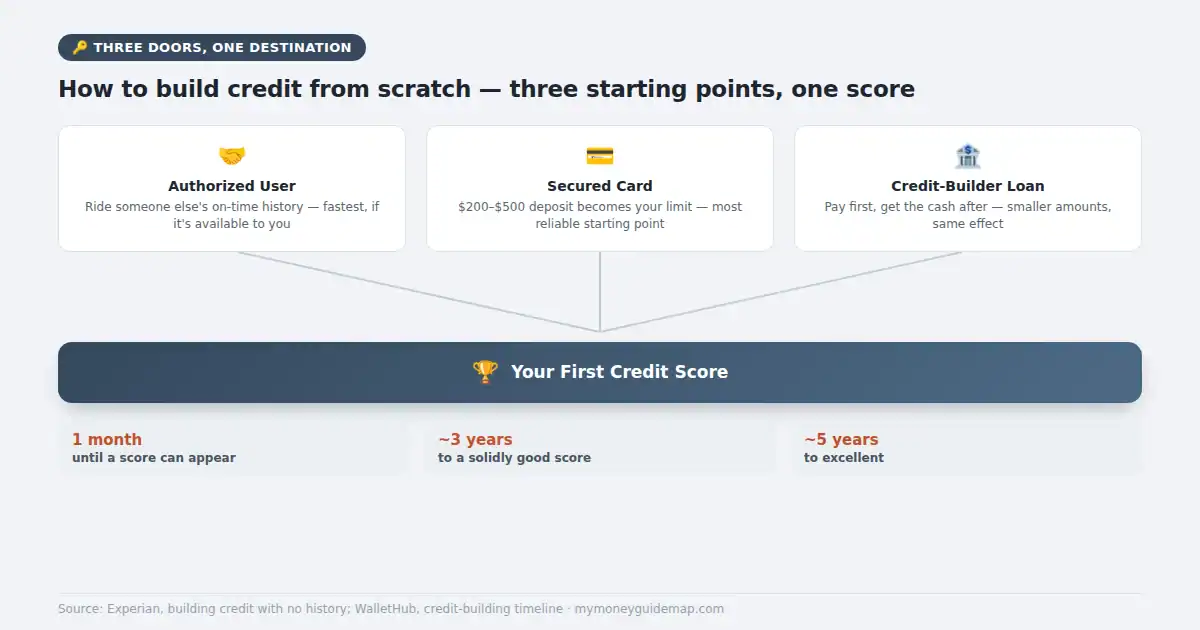
How to build credit from scratch is a strange problem to have, because most of the ways lenders judge you require you to already have a credit history — and if you’ve just moved out, just graduated, or just never needed a credit card until now, that’s exactly what you don’t have. It feels like a locked door with no key. The good news is there are a handful of well-worn ways in, and you really only need one of them to get started — though if you already have some credit history that’s been damaged rather than missing entirely, the fix is different, and starts with a look at what’s actually dragging your report down instead of any of the steps below.
Become an Authorized User If You Can
If a parent, partner, or someone else you trust has a credit card in good standing, ask if they’ll add you as an authorized user. Their account’s payment history — the good kind, ideally years of it — can start showing up on your own credit report almost immediately, without you ever touching the card. It’s the fastest legitimate shortcut that exists, but it only works if the primary cardholder actually reports to the credit bureaus and genuinely pays on time, so it’s worth asking a direct question before you say yes: has this card ever had a late payment? If the answer is anything but a confident no, look elsewhere.
A Secured Card Is the Most Reliable Starting Point
For most people without that option, a secured credit card is where building credit from scratch actually begins. You put down a deposit — often $200 to $500 — and that becomes your credit limit, which is why banks approve people with zero history for these cards when they’d reject the same person for a regular one. You use it like a normal card, pay it off in full, and the deposit sits there as the bank’s safety net until you’ve proven you don’t need one. Most issuers will graduate you to an unsecured card and refund the deposit after 6 to 12 months of on-time payments.
Credit-Builder Loans Flip the Order, But They Still Work
Not everyone can go the authorized-user or secured-card route, and that’s where a credit-builder loan comes in as a third answer to how to build credit from scratch. It’s the odd one out, and it can feel backwards the first time you hear how it works: the bank holds the loan amount in a locked account while you make monthly payments toward it, and you only get the money once you’ve finished paying it off. What you’re actually buying is the payment history, not the cash — every on-time payment gets reported the same way a car loan or credit card payment would. It’s a solid option if a secured card’s deposit is more than you can spare right now, since credit-builder loans are usually available for much smaller amounts.
Don’t Expect a Score Overnight
This is the part of how to build credit from scratch that trips people up the most, because the first few months feel like nothing is happening. Once you’ve opened your first account, it can take as little as a month for a score to appear at all — VantageScore can generate one from a single month of activity, though the more widely used FICO models generally want three to six months first. That first number is really just a starting point, not a finish line: most people need roughly three years of consistent on-time payments to reach a solidly good score, and closer to five for excellent. A missed payment early on hurts more than it would later, too, simply because there isn’t yet a long track record to absorb it.
Whichever route you take, how to build credit from scratch really comes down to mechanics that never change: pay on time, every time, and keep your balances low relative to whatever limit you’re given. None of the shortcuts above skip that requirement, they just get you in the door to start proving it. If you’re deciding between a secured card and a credit-builder loan and genuinely can’t tell which fits your situation better, the deposit size is usually the deciding factor — a card if you can spare a few hundred dollars up front, a loan if you’d rather build history in smaller monthly pieces. Once you have a score to look at, understanding what it actually means is the natural next step.