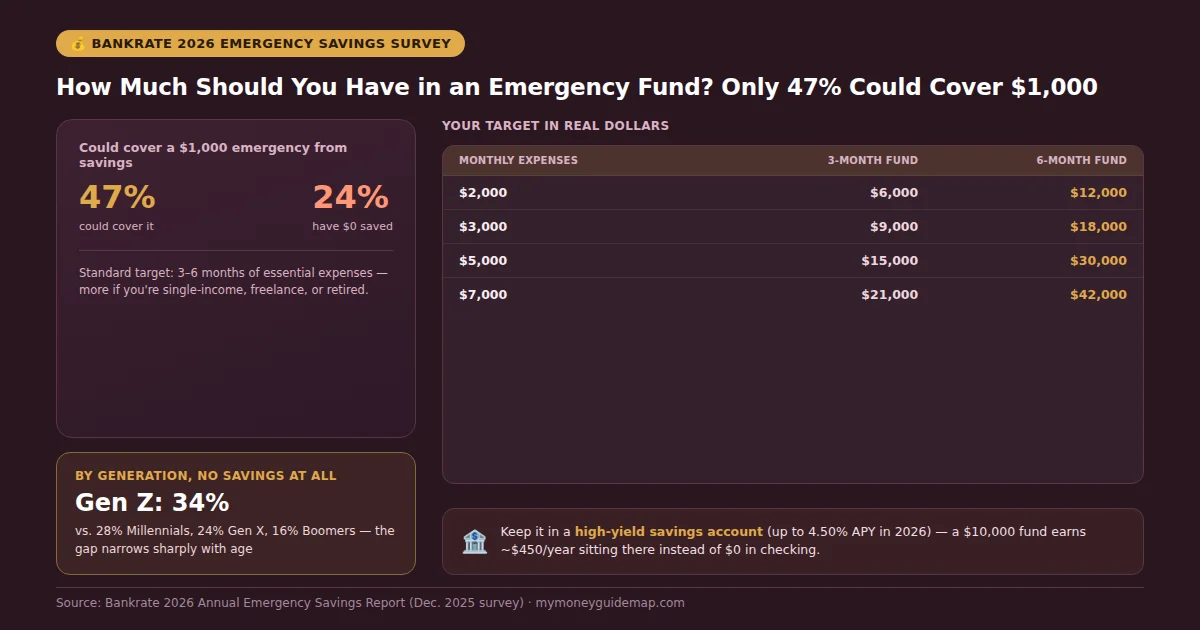
How much should you have in an emergency fund? According to Bankrate’s newest 2026 survey, only 47% of Americans could cover a $1,000 emergency using savings alone, and 24% have no emergency savings at all. That gap is exactly why this question matters so much right now. Below, you’ll find the standard rule, a quick-reference dollar table, a job-stability adjustment, and answers to the most common follow-up questions.
How Much Should You Have in an Emergency Fund? The 3-6-Month Rule Explained
The classic answer is simple: save three to six months of essential living expenses. This covers rent or mortgage, groceries, utilities, insurance, and minimum debt payments — not your full lifestyle spending.
Why this range specifically? Three months is generally enough to cover a short job search or a single major unexpected expense. Six months, however, gives you a much bigger cushion if a job loss drags on longer than expected.
Here’s the short version:
- 3 months: A reasonable floor for most stable, dual-income households.
- 6 months: The safer standard for single-income households or less predictable jobs.
- 9-12 months: Worth considering if your income is highly variable or you’re the sole earner.
Emergency Fund by Monthly Expenses: A Quick-Reference Table
Because “three to six months” means something different for every budget, here’s what that actually looks like in dollars:
| Monthly Essential Expenses | 3-Month Fund | 6-Month Fund | 9-Month Fund |
|---|---|---|---|
| $2,000 | $6,000 | $12,000 | $18,000 |
| $3,000 | $9,000 | $18,000 | $27,000 |
| $5,000 | $15,000 | $30,000 | $45,000 |
| $7,000 | $21,000 | $42,000 | $63,000 |
| $10,000 | $30,000 | $60,000 | $90,000 |
Find your row, and you’ll have a real number to work toward instead of a vague guideline.
Adjust the Target Based on Your Job Stability
Not every household needs the same number of months. How much should you have in an emergency fund really depends on how predictable your income is:
- Stable salary, dual-income household — 3 months is usually sufficient, since a second income cushions the blow if one earner loses their job.
- Single-income household — Aim for 6 months, because there’s no second paycheck to fall back on.
- Freelance, commission-based, or gig income — Aim for 6-9 months, since monthly income itself can swing significantly.
- Retired or on fixed income — 9-12 months is worth targeting, since replacing lost income isn’t an option the way it is with a job search.
If you’re unsure which category fits, it’s safer to round up rather than down.
Where to Keep Your Emergency Fund in 2026
Your emergency fund needs to do two things at once: stay liquid, and still earn something. That rules out a few common options:
- High-yield savings account (HYSA): The best default choice in 2026, with top nationally available accounts paying up to 4.50% APY — no penalty for withdrawing when you actually need the money.
- Money market account: A reasonable alternative to a HYSA, often with similar rates and check-writing access.
- CDs: Generally a poor fit, since early withdrawal penalties work against the entire point of an emergency fund.
- Checking account: Technically liquid, but it earns close to nothing and makes the money too easy to spend on non-emergencies.
A $10,000 emergency fund sitting in a 4.50% APY HYSA earns roughly $450 a year in interest — money you’d simply lose by leaving that same balance in a checking account instead.
Frequently Asked Questions
How much should you have in an emergency fund if you’re just starting out? Start with a smaller goal like $1,000, then build toward one full month of expenses before working up to the full 3-6 month target. Momentum matters more than hitting the final number immediately.
Is 3 months of emergency fund enough? For a stable, dual-income household with low fixed costs, yes. For single-income or variable-income households, 6 months or more is the safer target.
Should you invest your emergency fund instead of keeping it in savings? No. An emergency fund’s job is to be available immediately and hold its value, not to grow aggressively. A high-yield savings account is the right tool; a brokerage account is not.
How do I build an emergency fund fast? Automate a fixed transfer every payday, redirect any windfalls (tax refunds, bonuses) straight into the account, and keep it in a separate bank so it’s out of sight from everyday spending.
Once you know your number from the table above, the next step is simple: automate the transfers so the fund builds itself instead of depending on willpower every single month. Pay Yourself First covers exactly how to set that up.