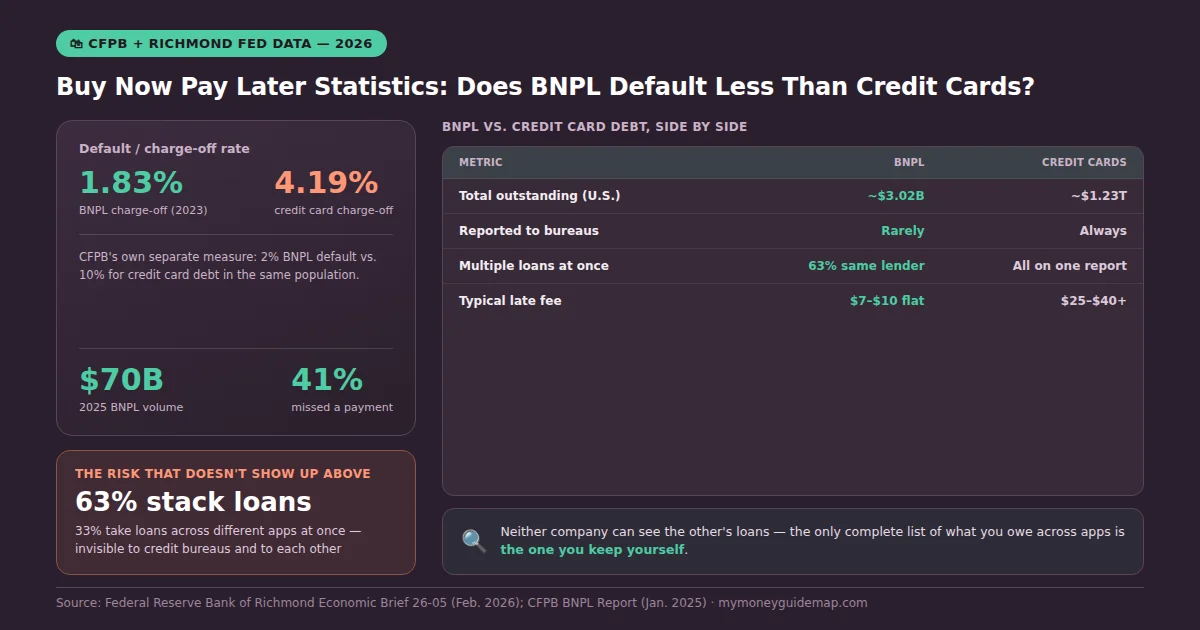
Buy now pay later statistics tell a more complicated story than the “debt trap” headlines suggest. According to the Federal Reserve Bank of Richmond’s own 2026 research brief, BNPL loans actually charged off at a lower rate than credit cards in the most recent year measured — 1.83% versus 4.19%. And yet the same research shows 41% of BNPL users made at least one late payment in the past year. Both things are true at once, and figuring out why matters if you’re juggling more than one “pay in 4” plan right now.
What Do Buy Now Pay Later Statistics Actually Show About Default Risk?
BNPL transaction volume hit roughly $70 billion in 2025, still just 1.1% of total credit card spending nationwide — a small slice of the debt picture, not the runaway crisis some coverage implies. The Richmond Fed’s charge-off comparison (1.83% for BNPL loans versus 4.19% for credit cards, both measured in 2023) points the same direction: as a product category, BNPL loans go unpaid less often than card balances do. The Consumer Financial Protection Bureau’s own analysis found something similar using a different measure — a 2% default rate for BNPL borrowers against 10% for credit card debt among the same population. The two agencies aren’t measuring identically (charge-offs versus defaults, different years), but they land on the same basic conclusion: on paper, buy now pay later statistics make the product look safer than a credit card, not riskier.
The Buy Now Pay Later Statistic That Actually Matters More Than Default Rates
Here’s what the default numbers miss: BNPL lenders generally don’t report your loans to Equifax, Experian, or TransUnion, and they can’t see each other’s loans either. The CFPB found that 63% of BNPL borrowers took out multiple loans from the same lender within a year, and 33% took out loans across different firms simultaneously — up from 32% the year before. Heavy users, meaning anyone taking out 12 or more loans a year, carried a median of 2.6 active loans on any given day. None of that shows up on a credit report, and no single BNPL company can see what you owe the others. You’re the only one tracking the full picture, whether you’re doing it on purpose or not.
Buy Now Pay Later vs. Credit Card Debt: A Side-by-Side Look
| Buy Now Pay Later | Credit Cards | |
|---|---|---|
| Default/charge-off rate | 1.83%–2% | 4.19%–10% |
| Total outstanding (U.S.) | ~$3.02 billion at any time | ~$1.23 trillion |
| Reported to credit bureaus | Rarely | Always |
| Borrowers with multiple loans at once | 63% (same lender), 33% (across firms) | N/A — all visible on one report |
| Typical late fee | ~$7–$10 flat, capped near 25% of purchase | Often $25–$40+, or a rate hike |
The gap in scale is enormous — BNPL debt is roughly a rounding error next to credit card debt nationally. But the per-borrower risk doesn’t show up in that comparison, because BNPL’s whole structure was built around small, easy-to-approve installment loans that nobody outside the lender is watching. These buy now pay later statistics also help explain why the two products get compared so often in the first place: both are unsecured, revolving-feeling ways to spread out a purchase, even though only one of them leaves a paper trail anyone else can see.
What This Means If You’re Using Buy Now Pay Later Right Now
None of this means BNPL is secretly dangerous for someone using one plan at a time for a planned purchase — the low charge-off rate is real. The risk shows up specifically for anyone stacking loans across Klarna, Afterpay, Affirm, and similar apps at once, since nothing forces those balances into one place the way a credit card statement does. A practical fix: keep your own running list of every open BNPL balance and its due date, the same way you’d track any other bill, rather than trusting any single app to show you the full picture — because it can’t. It’s also worth remembering that missing a payment doesn’t just cost the $7-to-$10 late fee; some BNPL lenders have started reporting missed payments (though not on-time ones) to credit bureaus, which means the invisibility that makes stacking easy can flip into a visible negative mark the moment something goes wrong. If you’re trying to understand how that kind of mark would actually move the needle, the What Is a Good Credit Score? guide breaks down what factors carry the most weight.
None of the major statistics roundups on this topic put the default-rate comparison and the loan-stacking numbers side by side, even though reading them together is what actually tells you whether BNPL is safe for your situation — a single plan for a planned purchase is a very different bet than four overlapping plans you’re tracking from memory.
The honest read on buy now pay later statistics is that the product isn’t the trap the headlines describe, and it isn’t harmless either — it’s a real loan that happens to be invisible to everyone except you, which puts more of the tracking burden on the borrower than a credit card ever does.