If you’ve read up on both budgeting methods already and still can’t decide where to start, you’re not alone — 50/30/20 rule vs zero-based budgeting is one of the most common budgeting questions there is, precisely because both methods genuinely work. The catch is that they work for different kinds of people, and picking the one that fits your life matters more than picking the “better” one on paper.
How Much Time Each One Actually Takes
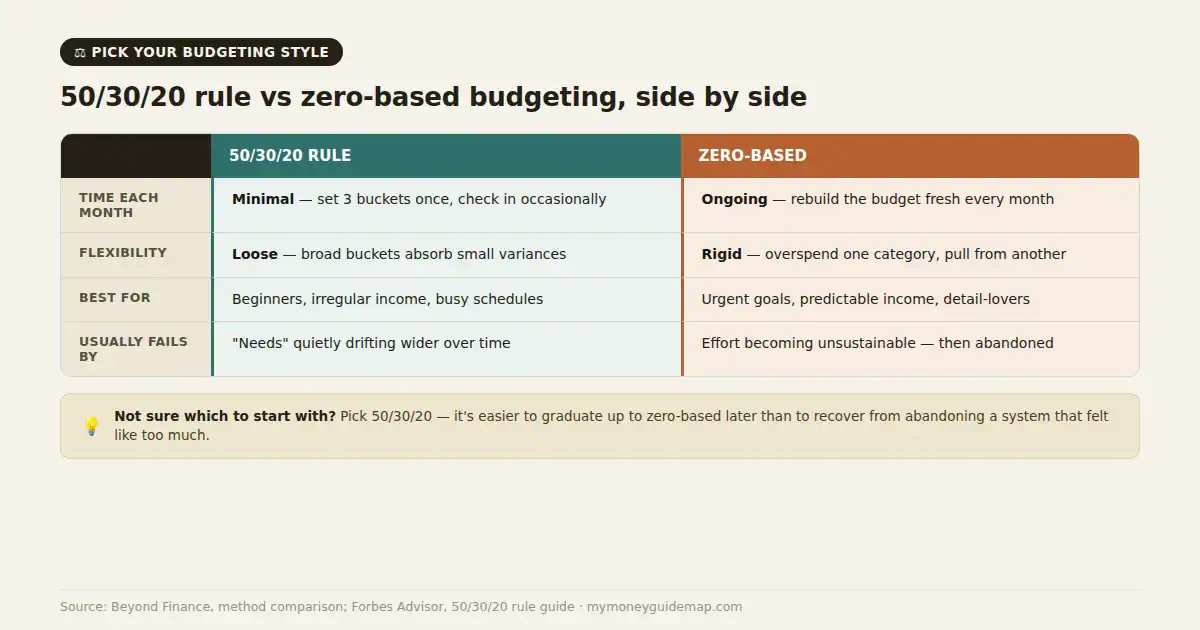
This is the biggest practical difference. Zero-based budgeting demands significant, ongoing effort every month — you rebuild the budget from scratch, assign every dollar a job, and actively track spending against each category as the month goes on. The 50/30/20 rule asks for much less: once your three buckets (needs, wants, savings) are set up, checking in is quick and infrequent. If you know a detailed monthly ritual isn’t realistic for your schedule, that alone can settle the 50/30/20 rule vs zero-based budgeting question before you look at anything else.
How Rigid Each Method Really Is
Zero-based budgeting is rigid within its categories and gets rebuilt each month — overspend on groceries and you have to consciously pull money from somewhere else to cover it, which some people find keeps them honest and others find exhausting. The 50/30/20 rule is looser by design: its three broad buckets absorb small variances without forcing a rebalancing act every time a category runs a little over. Neither is objectively better here — it depends on whether tight category-level control feels motivating or draining to you personally.
Who Each Method Is Actually Built For
Zero-based budgeting tends to suit people chasing a specific, urgent goal — aggressive debt payoff, a big savings target on a deadline — along with anyone who has fairly predictable income and enjoys detailed tracking. The 50/30/20 rule tends to suit beginners, people with irregular income, busy schedules, or anyone who has tried a detailed budget before and abandoned it. If you’re newer to budgeting altogether, that’s a real signal worth listening to rather than defaulting to whichever method sounds more serious.
The Way Each One Tends to Fail
It’s worth knowing how each method usually breaks down, since that’s often more useful than knowing how it works when things go well. Zero-based budgets tend to get abandoned when the ongoing effort becomes more than someone can sustain — it’s not that the system stops working, it’s that people stop doing it. The 50/30/20 rule fails differently: because the categories are broad, “needs” can quietly drift and expand over time until it’s absorbing money that should have gone to savings, without any single moment where it feels like something went wrong.
50/30/20 Rule vs Zero-Based Budgeting: Which Should You Start With?
If you’re not sure, start with the 50/30/20 rule — it’s the lower-commitment option, and it’s much easier to graduate from a simple system to a detailed one than to recover from abandoning a detailed system that felt like too much. Once you have a specific goal that needs more precision — paying off a specific debt fast, or hitting an exact number in a sinking fund by a deadline — that’s usually the moment zero-based budgeting starts to earn its extra effort. Plenty of people end up using both at different points, not because they picked wrong the first time, but because the right method changes as the goal changes.
The Actual Takeaway
50/30/20 rule vs zero-based budgeting isn’t really a competition — it’s a question of how much hands-on effort your current life can actually sustain. The 50/30/20 rule wins on simplicity and staying power; zero-based budgeting wins on precision and control when you need it. If you haven’t started budgeting at all yet, the lower-friction option is almost always the right first move, since the best budgeting method is still the one you’ll actually keep using next month.
1 thought on “50/30/20 Rule vs Zero-Based Budgeting: Which Fits You Better?”