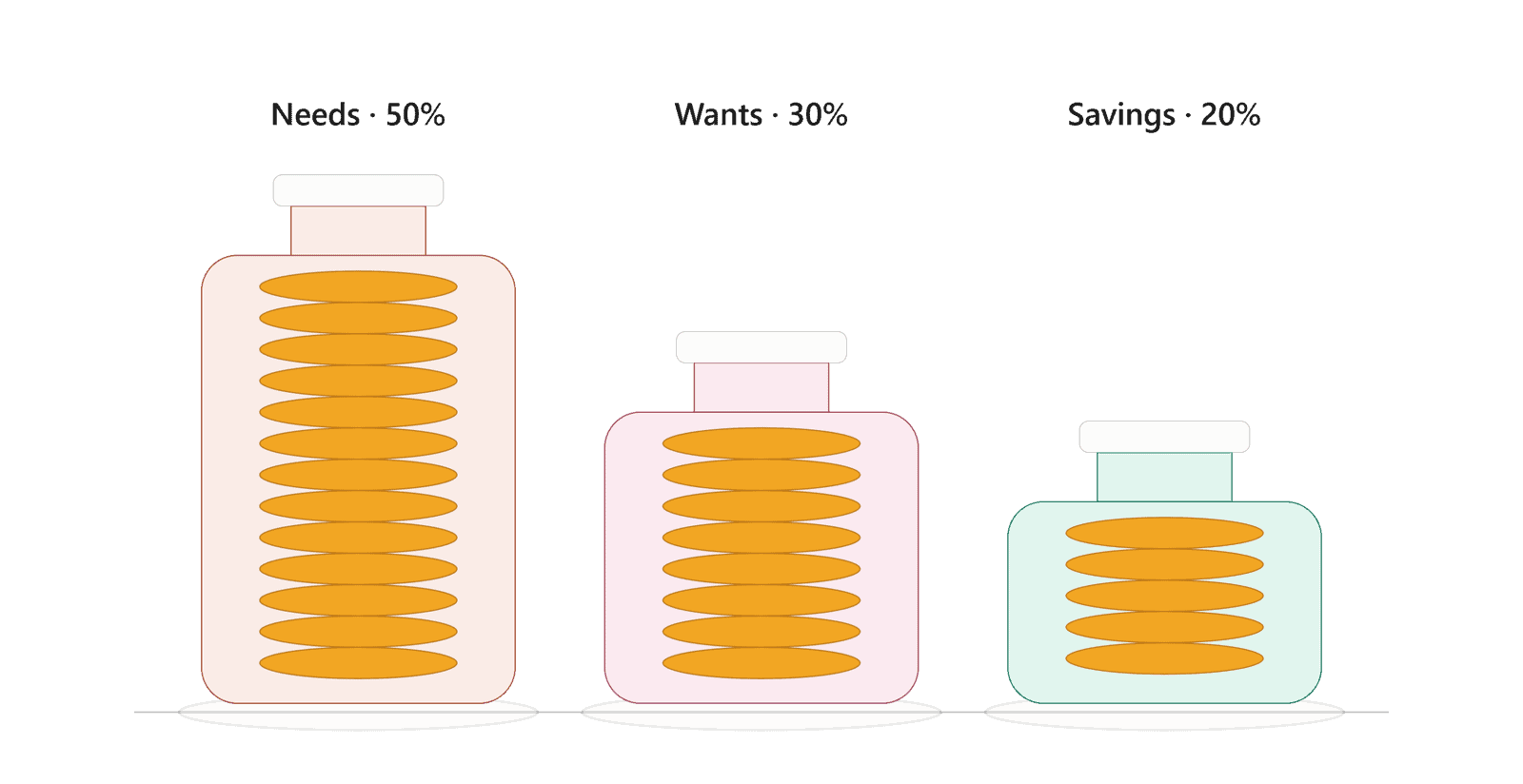
If zero-based budgeting sounded like more detail than you’re ready for, there’s a simpler entry point — and it’s probably the most talked-about budgeting method out there: the 50/30/20 rule.
Where It Actually Comes From
The 50/30/20 rule isn’t a recent trend. It was popularized back in 2005 by Senator Elizabeth Warren — before she was a senator, she was a Harvard Law professor studying consumer debt — in a book she co-wrote with her daughter, Amelia Warren Tyagi, called “All Your Worth.” She originally called it the Balanced Money Formula.
Two decades later, it’s still one of the most recommended starting points for people who are new to budgeting, mostly because of how little math it requires.
How the 50/30/20 Rule Works
The idea is simple: take your after-tax income (what actually lands in your bank account) and split it into three buckets.
50% goes to needs
These are the expenses you genuinely can’t avoid: rent or mortgage, utilities, groceries, minimum debt payments, insurance, transportation to work. If skipping it would create a real problem, it belongs here.
30% goes to wants
This is everything that makes life more enjoyable but isn’t required to survive: dining out, streaming subscriptions, hobbies, travel, that nicer version of something you didn’t strictly need. Nothing wrong with this bucket — it’s built into the plan on purpose.
20% goes to savings and debt payoff
This includes building an emergency fund, contributing to retirement, and paying down debt beyond the minimum payments. This bucket is often the one people accidentally skip, which is exactly why the rule gives it a fixed, non-negotiable percentage.
A Quick Example
Say your monthly take-home pay is $4,000. Under the 50/30/20 rule, that breaks down to:
- $2,000 for needs (rent, utilities, groceries, minimum payments)
- $1,200 for wants (eating out, entertainment, subscriptions)
- $800 for savings and extra debt payoff
No spreadsheet gymnastics required — just three numbers to keep in mind.
Why This Method Is So Popular
The appeal is almost entirely about simplicity. Instead of managing a dozen different spending categories, you’re only tracking three. That makes it a lot easier to actually stick with, especially if you’ve tried more detailed budgeting methods before and abandoned them within a few weeks.
It also builds in permission to spend on things you enjoy. A lot of budgeting advice treats every non-essential purchase like a failure. The 50/30/20 rule doesn’t — it assumes you’ll spend 30% of your income on things you simply want, and treats that as completely normal.
Where the Rule Starts to Break Down
Here’s the part a lot of beginner guides skip: the 50/30/20 rule was designed around a certain cost of living, and for a lot of people today, the math doesn’t quite hold up.
In high cost-of-living cities, housing alone can eat up 45–60% of take-home pay — well past the 50% “needs” ceiling before groceries or utilities even enter the picture. Financial planners have started recommending adjusted versions, like a 60/30/10 split, to reflect how much rent has outpaced income growth in many areas.
None of this means the rule is broken or useless. It means it works best as a starting framework, not a strict law. If your needs genuinely take up 65% of your income because of where you live, that’s not a personal failure — it’s a sign to adjust the percentages to fit your actual numbers, while still keeping the same basic structure: needs, wants, savings, each with an intentional share.
Is the 50/30/20 Rule Right for You?
This method tends to work best if:
- You’re budgeting for the first time and want something simple enough to actually stick with
- You don’t want to track a long list of detailed categories
- Your expenses are relatively predictable month to month
It tends to work less well if:
- You live somewhere with a very high cost of living, where needs alone blow past 50%
- You’re aggressively paying off debt and want more precision than three broad buckets allow — in that case, zero-based budgeting (which we covered in an earlier post) gives you more control
A lot of people actually use both: starting with 50/30/20 to build the habit, then graduating to a more detailed method like zero-based budgeting once they’re comfortable tracking their spending.
The Takeaway
The 50/30/20 rule isn’t a perfect formula for everyone, and it was never meant to be. What it offers is a starting point simple enough that you’ll actually use it — and for a lot of people just getting into budgeting, that matters more than precision.
Once you get a feel for your own needs-wants-savings split, you can adjust the percentages to match your real life instead of a formula from a book.
1 thought on “The 50/30/20 Budget Rule Explained (With a Simple Example)”